





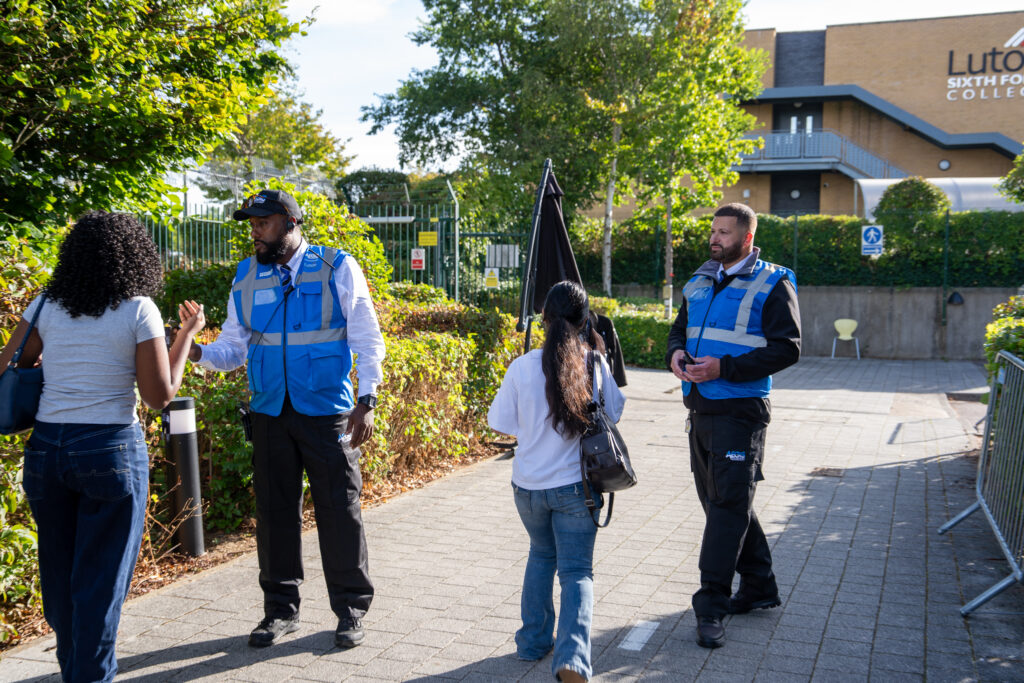
Consider two very different sites: a busy corporate office in a city centre and a vacant property awaiting redevelopment on the outskirts of a town. Both require security, but the risks they face are entirely different. One must manage high footfall, controlled access, and the flow of employees and visitors throughout the day. The other is exposed to trespass, vandalism, and undetected intrusion, often outside of working hours.
Treating these environments the same is not just ineffective; it can leave critical vulnerabilities unaddressed. Security starts with understanding the unique characteristics of each site and tailoring the approach accordingly.
Every environment operates within its own unique context. Factors such as location, footfall, building usage, and even time of day can significantly influence the level and type of risk a site encounters. A busy city-centre office, a remote construction site, and a vacant commercial property will each experience entirely different challenges. Recognising these differences is the first step in building a security strategy that works.
Risk is shaped by environment
A site’s location alone can dramatically affect its exposure. Urban environments often contend with opportunistic theft, and unauthorised access, while rural or isolated locations may face slower response times and reduced natural surveillance. Similarly, the purpose of a building, whether it’s public-facing, operational, or temporarily unused, plays a role in determining the threats it faces.
Footfall is another critical factor. High volumes of people increase the likelihood of incidents, from accidental damage to deliberate wrongdoing. Larger crowds can elevate risks such as theft, unauthorised access and property damage, particularly when environments become more dynamic or less controlled.
Time also matters. A site that is secure during working hours may become vulnerable overnight, at weekends, or during holiday periods. Construction sites, for example, are often most at risk when unoccupied, while offices hosting events outside normal hours introduce entirely different security considerations – see our article on event security.
Understanding risk enables prevention
Security should never be reactive. Waiting for an incident to occur before acting can be costly, not just financially, but in terms of reputation, safety, and operational disruption. A proactive approach begins with understanding where and when risks are most likely to arise.
A risk assessment considers how people move through a space, where vulnerabilities exist, and how different scenarios might unfold. Entry and exit points, lighting conditions, asset locations, and patterns of activity all play a role. By identifying these factors early, businesses can implement measures that prevent issues rather than simply responding to them.
This is where tailored security comes into its own, the right solution for a logistics hub may involve perimeter protection and vehicle monitoring, while a corporate office might prioritise access control and reception security. Vacant properties, on the other hand, benefit from early-warning systems that detect intrusion before it escalates into damage or occupation. For example, modern perimeter detection systems can identify movement at the boundary of a site and trigger alerts before an intruder reaches the building itself. This kind of early intervention capability can significantly reduce risk and enable a rapid, targeted response.
Technology has transformed how security is delivered, but it is most effective when aligned with the specific needs of a site. Intelligent CCTV, access control systems, and connected devices can now distinguish threats from false alarms, improving response times and operational efficiency.
However, technology alone is not the answer. The most effective security strategies combine advanced systems with trained professionals who can interpret information, make decisions, and adapt to changing circumstances. Human judgement remains essential, particularly in complex or unpredictable environments.
The key is integration. When people, processes, and technology work together, security becomes not just a protective measure, but a strategic function that supports business continuity and resilience.
Moving beyond a one-size-fits-all mindset
Taking the time to understand the nuances of the environment, how it operates, when it is most vulnerable, and what it needs to function safely, can make a difference in preventing incidents before they occur.
Ultimately, effective security is about alignment. It’s about matching the right solutions to the right risks, ensuring that protection is both proportionate and purposeful. Businesses that embrace this tailored approach are better equipped to safeguard their people, assets, and operations.
At Aegis Support Services, we understand that no two sites are the same. That’s why we deliver tailored security solutions designed around your risks and needs. From manned guarding and mobile patrols to advanced technology and perimeter protection, we combine expertise with innovation to help you stay protected, proactive and prepared.
To discuss how we can support your security needs, call us on 03300 50 10 10 or email info@aegissupportservices.com

Security incident reporting: why good data matters
Security incident reporting is about more than recording what happened. Good data can reveal patterns,...
Sep

Season is changing – is your security strategy?
As the seasons change, so do the risks businesses face. From shorter daylight hours and...
Sep

Aegis Support Services secures three-year security services contract with Luton Sixth Form College
Aegis Support Services has announced it has secured a new five-year contract with Luton Sixth...
Sep

The role of a 24/7 control room in protecting businesses
A 24/7 control room does far more than monitor CCTV. Find out how continuous security...
Aug

Getting your school ready for the new academic year
The weeks before a new school year offer the perfect opportunity to prepare your site...
Aug

Aegis Support Services Achieves ACS Pacesetter Accreditation
Aegis Support Services is proud to have achieved ACS Pacesetter status.
Jul

Why vacant properties need more than locked doors
Empty properties face unique security risks. Find out how to protect your investment with vacant...
Jul

10 common security vulnerabilities businesses overlook
From access control to perimeter security, discover the most common business security vulnerabilities and practical...
Jul
 Visit Aegis Dubai
 Visit Aegis Training